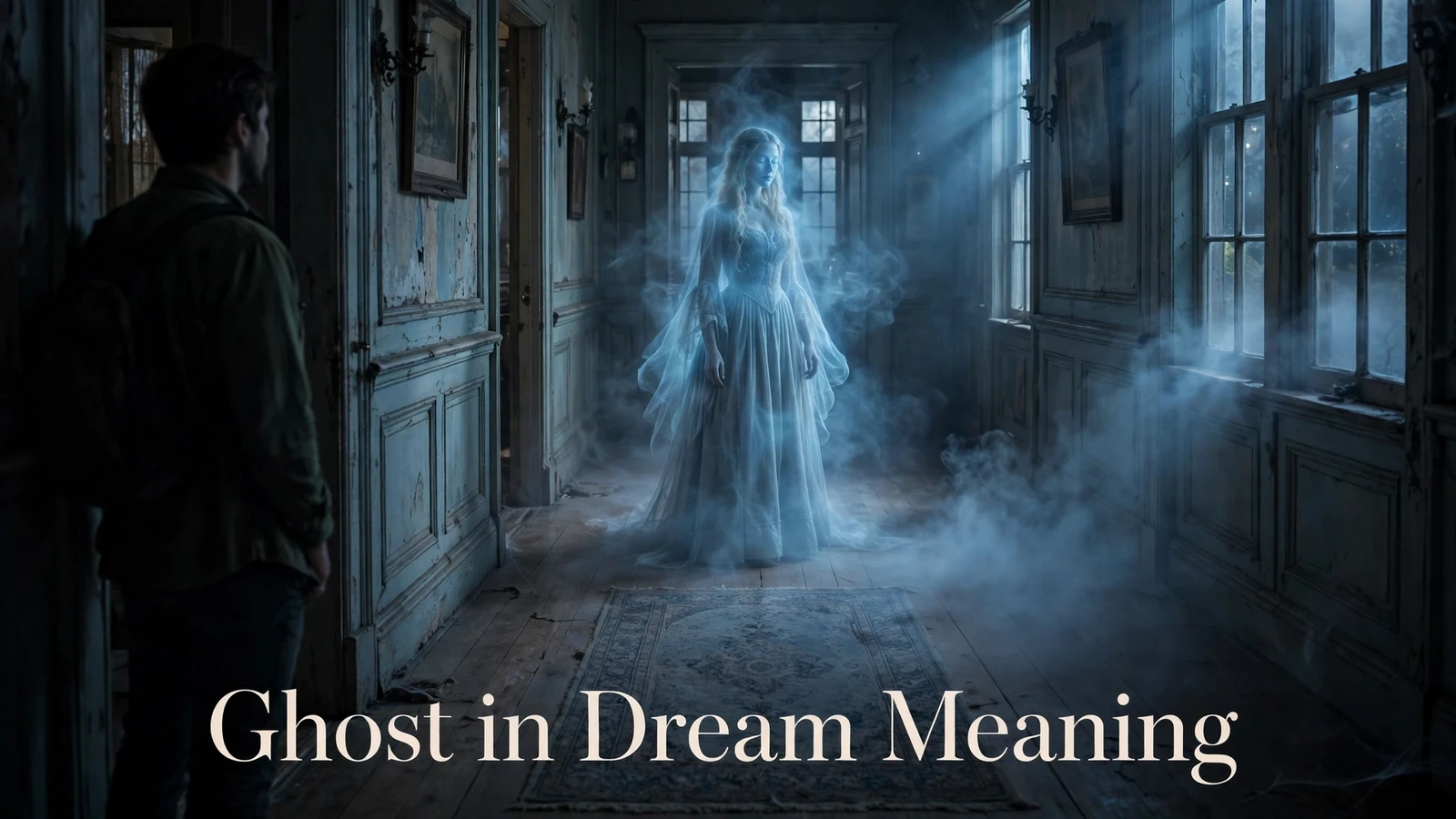
You wake up in the dark, your heart beating fast. In your dream, a pale figure stood at the end of your bed, or drifted through a hallway you know well. You could not see its face clearly, but you knew it was there. And now you are wondering what it meant. This is the ghost in dream meaning many people search for.
If you are searching for the ghost in dream meaning, you are in the right place. It is one of the most haunting dreams a person can have, and also one of the most misunderstood.
Before anything else, take a breath. A ghost dream is almost never a sign that your home is haunted. In dream language, a ghost usually means unfinished feelings, grief, a message from the past, or a part of yourself you have been ignoring. It is a symbol, not a real spirit in your room.
This article covers the ghost in dream meaning in psychology, the spiritual meaning, and the most common ghost dream scenes, so you can understand what your dream was trying to say.
What Does a Ghost in a Dream Mean?
The ghost in dream meaning usually points to something from the past that is still with you. It may be a memory, a loss, a regret, or a feeling you never fully faced. The ghost is the picture your mind chose for that unfinished thing.
Ghosts are silent, pale, and hard to hold. In a dream, that quality often mirrors a feeling that is also hard to hold. You may miss someone, carry guilt about a goodbye, or sense that a chapter of your life never truly closed.
The dream can also be about a part of yourself. A ghost may stand for a hope you gave up, a talent you buried, or a younger version of you that still wants to be heard. It is not always about another person.
The feeling in the dream matters more than the picture itself. If the ghost felt kind, the dream may be about love that still lives in you. If it felt frightening, the dream may be about fear you have not yet faced. Either way, the ghost is a messenger, not a threat.
Say this clearly. A dream of a ghost does not mean you are in danger. Dreams speak in symbols, not in literal facts. Your mind uses a strong picture to show that something from the past needs attention, and a ghost is a very strong picture.
Ghost in Dream Meaning in Psychology
Psychology reads a ghost dream through the idea of the unfinished past. When a loss, a goodbye, or a regret has not been fully felt, the sleeping mind gives it a shape. A ghost is that shape.
Carl Jung saw figures like ghosts as parts of the unconscious mind. A ghost may be a hidden part of you, a memory you pushed aside, or a feeling you never named. The dream brings it back so you can finally look at it.
Grief plays a large role in this dream. After losing someone you love, it is common to dream of them as a pale, quiet figure. This is not a sign of illness. It is the mind’s way of keeping the bond alive while you learn to live with the loss. For a related look at grief in dreams, see seeing multiple dead bodies in a dream.
Fear also shapes the dream. If you are afraid of change, of aging, or of being forgotten, your mind may gather that fear into a ghostly figure. The ghost is not a real visitor. It is the shape your fear takes.
The Spiritual Meaning of a Ghost Dream
In spiritual dream interpretation, a ghost is rarely about haunting. It is about a soul, a memory, or an energy that still lingers around you, asking for peace, release, or a simple moment of attention.
Many spiritual writers see a ghost dream as a visit, not a warning. A loved one who has passed may appear to say that they are at peace, or to remind you that love does not end with death. The dream can feel like a gift, even if it wakes you up shaking.
The dream can also carry a message about letting go. If the ghost will not leave, your spirit may be asking you to release something. It may be an old hurt, a broken promise, or a version of your life that no longer fits you.
If the ghost felt peaceful, take it as encouragement. Your spirit may be telling you that the past is safe now, and that you can carry the love forward without the pain. If the dream felt dark, it may be asking you to pray, to light a candle, and to trust that no hard season lasts forever.
Common Ghost Dream Scenarios and Their Meanings
The place and the details of your dream change the meaning. Below are the most common scenes people report, and what each one often means.
Seeing a Ghost in a Dream
Seeing a ghost often means that a memory or a feeling from the past is still present in your life. The ghost is usually a symbol of something unfinished, a goodbye you never said, or a question you never asked.
A Friendly Ghost in a Dream
A friendly ghost is one of the most comforting ghost dreams. It often means that love from the past is still with you, watching over you. If the ghost smiled or offered comfort, take it as a sign that you are not alone.
A Scary Ghost Chasing You
A ghost chasing you often means that you are running from a feeling. It may be guilt, grief, or a truth you do not want to face. The dream is asking you to stop running and turn toward what you fear.
Talking to a Ghost in a Dream
Talking to a ghost often means that you need a conversation you never had. Your mind is giving you the talk you missed, with a person or with a part of yourself. Listen to what was said. It may hold the answer you need.
A Ghost of Someone You Knew
Dreaming of a ghost of someone you knew is usually about grief and love. It does not mean the person is trapped or unhappy. It often means your heart is still holding them close, and the dream is a way to feel near them again.
A Ghost in Your House
A ghost in your house often means that something in your home life feels unsettled. It may be a family tension, an old argument, or a change in the household. The house is your inner life, and the ghost is the feeling living there.
A Ghost Child in a Dream
A ghost child often stands for innocence, a lost beginning, or a younger part of yourself. It may point to a childhood wound, or to a dream you had as a child that you gave up too soon. The child is asking to be seen.
A Ghost That Will Not Leave
A ghost that will not leave often means that a feeling has not been released yet. It may be regret, anger, or sorrow that keeps returning. The dream asks you to name the feeling, speak it aloud, and let it go gently.
Ghost Dreams, Chakras, and Emotional Blockages
In chakra teaching, the body holds seven main energy centers, and a ghost dream often points to more than one being blocked at the same time. That is why the dream can feel so heavy.
The heart chakra, in the center of the chest, is linked to love and grief. A ghost dream often points here, because loss lives in the heart. Letting yourself cry, even for a few minutes, can begin to clear this block.
The throat chakra, in the neck, is linked to voice and truth. A ghost dream may point to words never spoken, a goodbye never said, or a truth you swallowed. Speaking your feelings aloud, even to an empty room, can help this energy move.
The crown chakra, at the top of the head, is linked to spirit and connection beyond this life. A ghost dream may point here when it feels like a visit from beyond. Quiet prayer, meditation, and time in nature can help this energy settle.
After a ghost dream, sit quietly and ask yourself two questions. What from my past still needs my attention? What words do I still need to say? The answers often come quickly.
Cultural Interpretations of Ghost Dreams
Different cultures read this dream in different ways, but most of them agree on one thing. The dream is about the dead, the past, and the bond that does not break.
In many Eastern traditions, a ghost in a dream is read as a visit from an ancestor. It can mean that the ancestor is watching over the family, or that the family should remember them with an offering or a prayer.
In some African traditions, dreams of the dead are seen as direct messages. A ghost may bring a warning, a blessing, or a request, and the dreamer is expected to listen carefully and act on it with respect.
In Western dream books, a ghost dream often means guilt or unfinished business, a sign that the past is not yet at rest.
Across cultures, the message is the same. The dream is startling, but it is not a curse. It is a picture of memory and love, and it asks for attention, not fear.
Real-Life Examples: What People Felt After a Ghost Dream
A woman once shared that she dreamed of her grandmother standing in her kitchen, smiling, the night before a big exam. She woke up calm, and she later said the dream felt like a blessing, as if her grandmother was still cheering her on.
She passed the exam, and the dream never returned.
A man who had lost his brother dreamed of him sitting on their childhood porch. He woke up crying, then felt peaceful for the first time in months. The dream was his grief finding a quiet place to rest.
These stories are not proof of one fixed meaning. They show how the same startling symbol can speak to different people, and how facing the past often brings peace.
Frequently Asked Questions About Ghost Dreams
Does dreaming of a ghost mean my house is haunted?
No. A ghost dream is almost never a sign that your house is haunted. In dream language, a ghost means unfinished feelings, grief, or a message from the past. It is a symbol, not proof that a spirit is in your home.
What does it mean if a ghost talks to me in a dream?
If a ghost talks to you, the dream is often about a conversation you never had. Your mind may be giving you the words you missed, with a person or with a part of yourself. Pay attention to what was said, because it may hold guidance.
Is a friendly ghost dream a good sign?
Yes, a friendly ghost is a comforting sign. It often means that love from the past is still with you, and that you are watched over. If the ghost smiled or offered comfort, take it as a sign of peace.
Why do I keep dreaming of ghosts?
Repeated ghost dreams often mean that a message has not been fully heard yet. Your mind may be repeating the symbol because there is grief, guilt, or a memory you have not yet faced. When you name the feeling and speak it aloud, the dreams often fade.
What should I do after dreaming of a ghost?
First, breathe and remind yourself that the dream is a symbol, not a haunting. Write the dream down, and name one thing from your past that still asks for attention.
Talk to someone you trust, light a candle or say a prayer if that comforts you, and take one small step toward peace. If the dream repeats and leaves you very afraid, speak to a counselor or a person of faith for support.
Conclusion
A ghost in a dream is startling, but it is not a sign of danger. It is your mind and spirit showing you that something from the past is still with you, and that your heart is asking for peace.
The figure in the dream is not a real spirit in your room. It is a picture of memory, grief, and love, asking you to listen, to forgive, and to let go gently.
Take the dream as a call to be gentle with yourself. Name what still lingers, say the words you never said, and make one small step toward peace. Talk to someone you trust, and let the visit turn into healing.
May your nights grow peaceful again, and may your days grow lighter. The past can stay with you as love, without haunting your sleep.